


Technical SEO as a Software Engineering Discipline: Core Web Vitals, Crawl Budgets, and 100K+ Indexed Pages
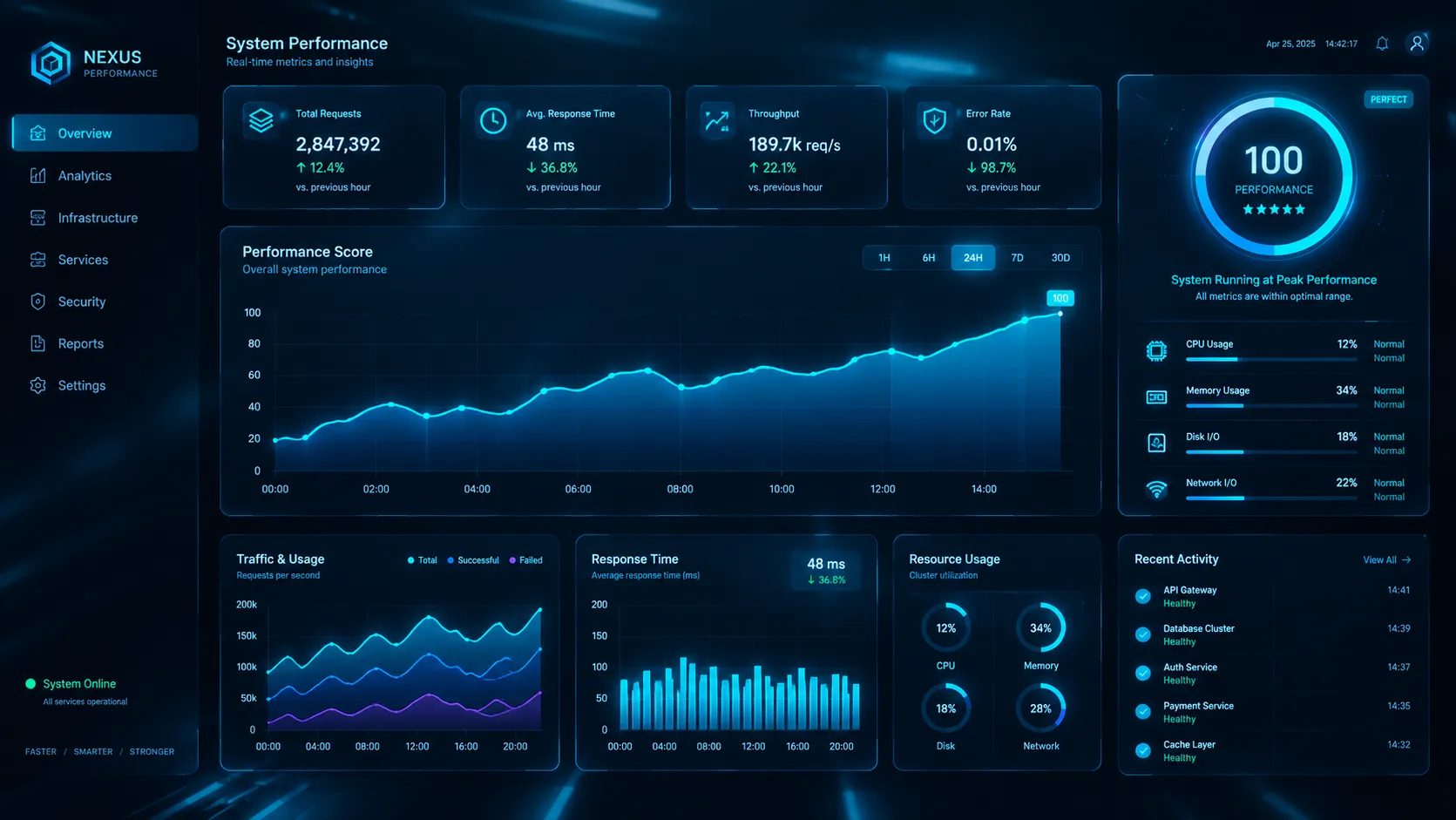
How to approach search engine optimization from a backend and architectural perspective — where sub-second server response times, programmatic JSON-LD injection, and automated crawl budget allocation scale organic visibility across massive digital portals.
Introduction — The SEO Execution Gap
Enterprise SEO teams rarely fail because they lack strategy. They fail because they lack execution infrastructure.
The pattern is predictable: an SEO team identifies thousands of optimization opportunities, builds a roadmap, and then waits months for engineering to implement changes. SEO tickets sit in the backlog behind feature requests. Insights die in spreadsheets. The gap between knowing what to do and being able to do it at scale becomes the bottleneck .
This is not an SEO problem. It is a software engineering problem.
Traditional SEO tooling — plugins, dashboards, checklists — works for sites with hundreds of pages. It collapses at 100,000+. At that scale, every SEO concern becomes an architectural concern:
Core Web Vitals become a server-side rendering and caching problem
Crawl budgets become a sitemap segmentation and log analysis problem
Structured data becomes an API injection and caching compatibility problem
Internal linking becomes a graph algorithm problem
This article is about treating technical SEO as what it actually is: a discipline of software engineering — where performance, scalability, and automation are the foundation, not the afterthought.
Part 1 — Core Web Vitals: Engineering Sub-Second Response Times
Core Web Vitals are not “SEO metrics.” They are real user experience measurements that directly influence search visibility. Google’s thresholds are explicit:
| Metric | “Good” | “Needs Improvement” | “Poor” |
|---|---|---|---|
| LCP (Largest Contentful Paint) | 0–2,500ms | 2,500–4,000ms | 4,000ms+ |
| INP (Interaction to Next Paint) | 0–200ms | 200–500ms | 500ms+ |
| CLS (Cumulative Layout Shift) | 0.00–0.10 | 0.10–0.25 | 0.25+ |
These are field metrics — measured from real Chrome users over a 28-day window, not lab conditions . This distinction matters: a site that scores well in Lighthouse but fails in CrUX is optimizing for the wrong signal.
The Server-Layer Approach to LCP
Most WordPress LCP failures come from three architectural gaps :
1. The hero image is not preloaded. WordPress 6.4+ ships wp_get_loading_optimization_attributes() to set fetchpriority="high" on the first large image. But this misfires on pages where the LCP element is set by a page-builder hero block (Elementor, Bricks, GenerateBlocks). The image waits behind the CSS chain, and LCP slips past 4 seconds on mobile .
Engineering fix: Programmatically identify the LCP element per template and inject <link rel="preload"> for it. Do not trust theme-level heuristics.
2. Render-blocking CSS/JS chain. A typical un-tuned WordPress install ships 8–14 <link rel="stylesheet"> tags in <head> — every one render-blocking . LCP cannot fire until the last one resolves.
Engineering fix: Inline critical above-the-fold CSS and defer the rest. The prioritize_critical_css approach extracts above-the-fold rules and injects them directly into the document <head>, eliminating the multi-stylesheet chain .
3. Missing width/height on images. Classic-editor content and shortcode galleries omit dimension attributes. The browser cannot reserve a layout box early, which delays LCP candidacy until the image decodes .
Engineering fix: Server-side HTML rewriting that injects dimensions uniformly across every page — not theme-level fixes that only cover editor-inserted images .
The CLS Problem: Dimensions at the Server Layer
CLS regressions on WordPress follow a predictable pattern: images without dimensions, web fonts with font-display: swap, and late-injected cookie banners .
The most impactful fix is architectural, not editorial:
Insert image dimensions at the server layer — rewriting HTML on the way out so every
<img>carrieswidthandheightattributes, regardless of how it was inserted .
This is not a theme fix. It is an infrastructure fix — one that applies uniformly across 100,000+ pages without manual auditing.
INP: The JavaScript Cost
INP measures interaction latency. On WordPress, the primary cause is main-thread JavaScript bloat from plugins .
Engineering principle: Every plugin has a cost. Cut plugin bloat. Defer non-critical JavaScript. Delay third-party scripts until user action when possible .
Part 2 — Crawl Budget Engineering: From Sitemaps to Log Analysis
Crawl budget is the maximum number of pages a search engine will crawl within a given time span . For sites under 10,000 pages, it is rarely a concern. At 100,000+, it becomes the primary bottleneck for organic visibility.
Sitemap Segmentation: The 100K+ Strategy
A single sitemap for 100,000 pages is harder for crawlers to process than segmented sitemaps .
The engineering pattern:
| Segmentation Strategy | Purpose |
|---|---|
| By category | One sitemap per top-level category — crawlers prioritize active categories |
| By recency | A “recent” sitemap surfaces pages generated in the last 30 days |
| By update frequency | A “frequently-updated” sitemap surfaces volatile content for tighter recrawl cadence |
| Sitemap index | A parent sitemap-of-sitemaps pointing to all segments — this is what gets submitted |
Size limits: 50,000 URLs is the hard limit. 10,000–25,000 per segment is the practical range .
Thin Page Management: Noindex as Architecture
Pages with insufficient data should noindex rather than ship as bait .
The discipline: pages that fail a schema’s required-field threshold do not get a public URL. They sit as drafts until data populates .
Why this matters at scale: Search engines and AI engines apply set-level quality scoring. A set with 10,000 thin pages and 90,000 substantive pages scores worse than a set with just the 90,000 substantive pages — even though the absolute page count is lower .
Implementation pattern:
Thin pages render with
noindexmeta tagThin pages are excluded from sitemaps
Thin pages are not linked from any other page
Canonical Handling at Template Level
Duplicate-content risks at scale come from pivot patterns — X-vs-Y comparisons, filter pivots, sort pivots .
Engineering principle: Canonical decisions are designed at template time, not retroactively. The template either generates canonical-pair URLs (and chooses one as canonical from the start) or it does not generate the duplicate at all .
Crawl Rate Monitoring: The Signal
Google Search Console’s Crawl Stats report provides aggregate insights: pages crawled per day, average response time, crawl request distribution .
What to watch for:
| Signal | Meaning | Action |
|---|---|---|
| Crawl rate plateauing while page count grows | Hitting crawl budget limits | Noindex thin pages, segment sitemaps, reduce response time |
| Crawl rate dropping unexpectedly | Server errors, robots.txt changes, broken sitemaps | Investigate server logs immediately |
| Low-value pages receiving disproportionate crawl | Crawl budget waste | Internal linking restructuring, noindex thin pages |
Log File Analysis: The Ground Truth
Crawl stats in Search Console are aggregated. Server logs contain every request — the factual record of how search engines actually interact with your site .
What logs reveal:
Crawl frequency by URL
Bot activity by user agent
Response code distribution
Crawl depth and prioritization
Error and redirect occurrence rates
Engineering application: Log analysis validates whether technical SEO changes actually changed crawler behavior. It closes the feedback loop between optimization and outcome .
Part 3 — Programmatic JSON-LD: Structured Data at Scale
Structured data is not a “plugin feature.” At 100,000+ pages, it is an injection architecture.
The WordPress Injection Problem
The naive approach — add_action('wp_head', ...) to output JSON-LD — fails at scale for predictable reasons :
Cache plugins may truncate output
CDNs may filter
<script>tagsMultiple hooks stack, causing duplicate insertion
The architectural fix: Use wp_add_inline_script() to inject JSON-LD into an existing script block (like wp-i18n). This avoids tag-closing and execution-timing issues entirely .
Dynamic JSON-LD for Article Types
Static JSON-LD is nearly useless for SEO. Google requires structured data that strictly matches page content .
For Article pages, the required fields are: headline, datePublished, dateModified, author (nested object, not string), image, and mainEntityOfPage .
Engineering note: mainEntityOfPage must be an @id or WebPage object — not a raw permalink string. The URL must include protocol, domain, and trailing slash, matching the canonical URL exactly .
Avoiding Duplicate Schema
Many themes and SEO plugins (Yoast, Rank Math) already output JSON-LD. Manual injection creates duplicate @type declarations — which Google Search Console flags as errors .
Engineering pattern:
Detect existing schema output programmatically
Only inject schema types not already present
Never override global
WebPageorWebsiteblocks
Part 4 — The Automation Layer: Bridging SEO Strategy and Engineering Execution
At enterprise scale, the bottleneck is not strategy — it is execution velocity .
The Techelix case study demonstrates the pattern: a retail brand managing millions of product listing pages had a sophisticated SEO roadmap but could not execute because engineering tickets sat in the backlog for months. The solution was a custom automation layer that decoupled SEO execution from core engineering cycles .
Key automation features:
| Feature | Purpose |
|---|---|
| Bulk content injection | Generate, review, and inject optimized content blocks into thousands of templates simultaneously |
| API-led deployment | Mass metadata and on-page text updates without full theme deployment |
| Contextual link intelligence | Algorithmic identification of internal linking opportunities between related categories |
| Zero-latency updates | Changes that took weeks propagate in minutes |
Outcome: Rapid acceleration in indexed pages and organic traffic. The SEO team bypassed technical hurdles and deployed changes at scale .
Part 5 — The Complete Technical SEO Stack
Combining all disciplines into a coherent engineering architecture:
┌─────────────────────────────────────────────────────────────────┐
│                    INFRASTRUCTURE LAYER                         │
│  Server-side rendering │ Page caching │ CDN │ Object cache       │
├─────────────────────────────────────────────────────────────────┤
│                    PERFORMANCE LAYER                            │
│  LCP preload injection │ Critical CSS │ Image dimensions        │
│  JS deferral │ Font optimization │ Server response tuning       │
├─────────────────────────────────────────────────────────────────┤
│                    CRAWL LAYER                                  │
│  Sitemap segmentation │ Noindex thin pages │ Canonical mapping  │
│  Log file analysis │ Crawl rate monitoring                      │
├─────────────────────────────────────────────────────────────────┤
│                    STRUCTURED DATA LAYER                        │
│  Programmatic JSON-LD │ Schema type detection │ Injection API   │
├─────────────────────────────────────────────────────────────────┤
│                    AUTOMATION LAYER                             │
│  Bulk content injection │ API-led deployment │ Link intelligence│
└─────────────────────────────────────────────────────────────────┘
Engineering Principles
| Layer | Principle | Rationale |
|---|---|---|
| Infrastructure | Caching is not optional | PHP execution is the enemy of sub-second LCP |
| Performance | Fix at the server, not the theme | Uniform application across 100K+ pages |
| Crawl | Segment, noindex, monitor | Crawl budget is finite and must be allocated deliberately |
| Structured Data | Inject via API, detect duplicates | Plugin output conflicts with manual injection |
| Automation | Decouple SEO from engineering backlog | Execution velocity determines organic growth rate |
Part 6 — When to Use This Architecture (and When Not To)
Use engineering-driven technical SEO when:
✅ The site has 10,000+ pages requiring uniform optimization
✅ Core Web Vitals are failing at scale (not just homepage)
✅ Crawl budget is a constraint (large site, slow server)
✅ Structured data must be dynamic and content-accurate
✅ SEO execution is blocked by engineering backlog
✅ Organic traffic is a primary business channel
Do NOT use it when:
❌ The site has hundreds of pages — plugin-level SEO suffices
❌ No engineering capacity exists to maintain the automation layer
❌ The primary bottleneck is content quality, not technical execution
❌ Infrastructure access is limited (shared hosting without server control)
Technical SEO at scale is not about better tools. It is about better architecture.
Conclusion — SEO as Engineering, Not Marketing
The gap between strategy and execution is the defining problem of enterprise SEO. Closing that gap requires a different mindset:
Core Web Vitals are not metrics to optimize — they are server response times to engineer
Crawl budgets are not concepts to understand — they are finite resources to allocate
Structured data is not a plugin feature — it is an injection architecture
Internal linking is not a manual task — it is a graph algorithm
This is the discipline required for organic visibility at scale. Not SEO as marketing. SEO as software engineering.
A 100,000-page site is not a content problem. It is a distributed systems problem.
Author’s Note
This article reflects architectural patterns developed while engineering Barman News (100,000+ indexed articles) and Roza Boutique (300% organic growth through technical optimization). For collaboration on enterprise technical SEO architecture, reach out via the contact page.